Matryoshka World


Monday, February 21, 2011

Nanofuture 2030 on the path to Brain Augmentation

The Path to Brain Augmentation

New York Times excerpt from Michael Chorost's book World Wide Mind


Excerpt from chapter 4 of World Wide Mind, which discusses the possibility of using nanotechnology to directly connect the brain to the Internet (and other minds) in coming decades. Chorost discusses the need for any such technology to retain human intimacy. For the technology to be accepted, and successful, it must tactile and face to face interactions.

World Wide Mind

Saturday, February 19, 2011

Ray Kurzweil on the significance of IBM's Watson

Ray Kurzweil discusses the significance of IBM's Jeopardy! Champion computer Watson as a milestone in the progress of artificial intelligence.

Kurzweil concludes his thoughts with the statement that: " By the time the controversy dies down and it becomes unambiguous that nonbiological intelligence is equal to biological human intelligence, the AIs will already be thousands of times smarter than us."

While it is likely that artificial intelligence will continue to meet or surpass human intelligence in more and more areas, I'm not sure what it would really mean to think of something "thousands of times more intelligent" than a human. Certainly, computers will ultimately be able to process many times faster than a human brain, but that does not necessarily lead to a correspondingly greater intelligence.

If there are only so many layers of understanding before an ultimate knowledge of the universe would be reached, perhaps there is limit, beyond which it would not be meaningful to discuss greater intelligence. While there is no doubt that human intelligence would not be the pinnacle of potential intelligence in the universe, I'm not sure it will come to pass that computers will be thousands of times more intelligent than people in any meaningful sense.

The significance of IBM's Watson

Friday, February 18, 2011

The Atlantic: Mind vs Machine

IN THE RACE TO BUILD COMPUTERS THAT CAN THINK LIKE HUMANS, THE PROVING GROUND IS THE TURING TEST—AN ANNUAL BATTLE BETWEEN THE WORLD’S MOST ADVANCED ARTIFICIAL-INTELLIGENCE PROGRAMS AND ORDINARY PEOPLE. THE OBJECTIVE? TO FIND OUT WHETHER A COMPUTER CAN ACT “MORE HUMAN” THAN A PERSON. IN HIS OWN QUEST TO BEAT THE MACHINES, THE AUTHOR DISCOVERS THAT THE MARCH OF TECHNOLOGY ISN’T JUST CHANGING HOW WE LIVE, IT’S RAISING NEW QUESTIONS ABOUT WHAT IT MEANS TO BE HUMAN.


Mind vs. Machine


Thursday, February 17, 2011

Brief summary of Nick Bostrom's Simulation Argument

Bostrom's Simulation argument briefly summarized in this 2006 New Scientist article.

here is the argument as originally presented in Philosophical Quarterly

Wednesday, February 16, 2011

Watch NOVA's program on Watson: "The Smartest Machine on Earth


NOVA's program on the development of Watson, the Jeopardy computer champion.

The Smartest Machine on Earth

See also the IBM Watson page

Sunday, February 13, 2011

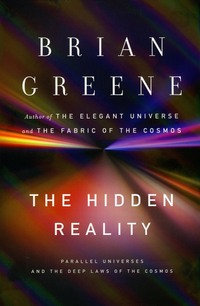
Brian Greene: The Hidden Reality: interview and excerpt from his new book


Brian Greene's new book The Hidden Reality: Parallel Universes and the Deep Laws of the Cosmos, explores how the cutting edge theories of physics including string theory, inflation, and quantum mechanics suggests that our universe may be one of many.

NPR recently had a story on Greene's new book that included an excerpt of the first chapter. Here is the link.

The Wall Street Journal recently interviewed Greene about his new book. Link to WSJ article.

Saturday, February 12, 2011

Watson and the future of AI


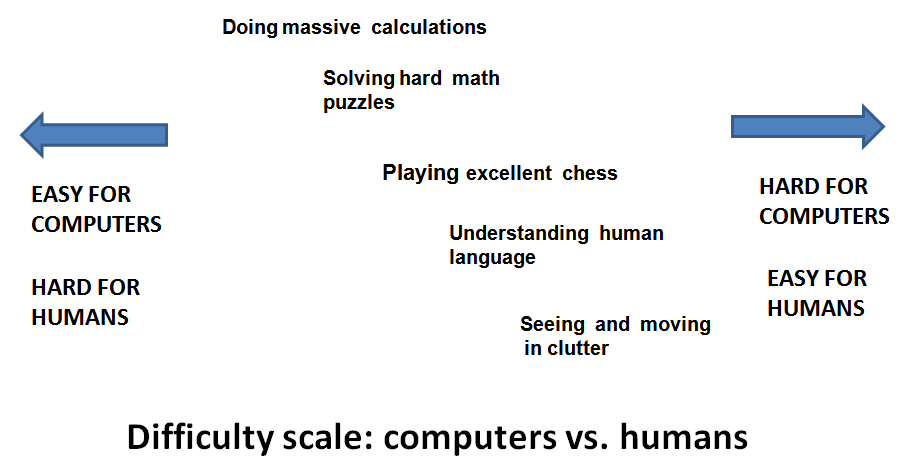
The fact that there are now computers who can compete and win on Jeopardy is remarkable. Of course computers can easily store the database of knowledge necessary for a successful performance, but understanding language and being able to anticipate the question and respond fast enough to beat quality human opponents is amazing and points to the slow but steady progress being made in the field of artificial intelligence.

Watson and the future of AI

Thursday, February 10, 2011

Time Magazine on the Singularity- 2045: The Year Man Becomes Immortal


Time magazine furthers the popularization of the concept of the Singularity

2045: The Year Man Becomes Immortal