Scientific American
Valid ideas that physical reality is vastly larger than human perception of it, and that the perceived part may not be representative of the whole, exist on many levels and have a long history. After a brief general inventory of those ideas and their implications, I consider the cosmological “multiverse” much discussed in recent scientific literature. I review its theoretical and (broadly) empirical motivations, and its disruptive implications for the traditional program of fundamental physics. I discuss the inflationary axion cosmology, which provides an example where firmly rooted, plausible ideas from microphysics lead to a well-characterized “mini-multiverse” scenario, with testable phenomenological consequences
Similarly, string theorists did not assume supersymmetry, extra dimensions, the dualities of M-theory or the myriad possible universes; they discovered them to be consequences of a theory that subsumes empirically well-established features such as general relativity, gauge field theory and chiral quarks and leptons. Current research is devoted to finding out what else M-theory requires. Moreover, there is a feeling, hard to convey to the layman but shared by many experienced theorists, that these ideas all hang together. As Peter Higgs said recently, "I'm a big fan of supersymmetry because it seems the only way to get gravity into the game''.Finally, you offer no credible alternative. If you don't like string theory the answer is simple: come up with a better one. The battle for the correct theory will not be won on Amazon or on the blogosphere, however. It will be won in the pages of scholarly scientific journals. Sadly, many critics of string theory, having lost their case in the court of science, try to win it in the court of popular opinion. A science writer calling the theorists who are actually doing the research "confidence tricksters'' or Stephen Hawking "a fairytale physicist'' doesn't cut the mustard.

With the discovery of only one particle, the LHC experiments deepened a profound problem in physics that had been brewing for decades. Modern equations seem to capture reality with breathtaking accuracy, correctly predicting the values of many constants of nature and the existence of particles like the Higgs. Yet a few constants — including the mass of the Higgs boson — are exponentially different from what these trusted laws indicate they should be, in ways that would rule out any chance of life, unless the universe is shaped by inexplicable fine-tunings and cancellations.

Are the finely-tuned physical laws that surround us mere coincidence, or does it imply that we are somehow meant to be here? That's where the Anthropic Principle comes into play.How does the Anthropic Principle change the meaning of the universe?
The theory surmises that a collapsing black hole causes the emergence of a new universe on the "other side", whose fundamental constant parameters (speed of light, Planck length and so forth) may differ slightly from those of the universe where the black hole collapsed. Each universe therefore gives rise to as many new universes as it has black holes. Thus the theory contains the evolutionary ideas of "reproduction" and "mutation" of universes, but has no direct analogue of natural selection. However, given any universe that can produce black holes that successfully spawn new universes, it is possible that some number of those universes will reach heat death with unsuccessful parameters. So, in a sense, fecundity cosmological natural selection is one where universes could die off before successfully reproducing, just as any biological being can die without having offspring.Leonard Susskind, who promotes a similar string theory landscape, stated: "I'm not sure why Smolin's idea didn't attract much attention. I actually think it deserved far more than it got"
"The process produces a family tree of universes. The tree is a fractal: no matter how closely you zoom in, it looks the same. In fact, the tree is a dead ringer for one of the most famous fractals of all, the Cantor set."


We argue that the global multiverse is a representation of the many-worlds (all possible decoherent causal diamond histories) in a single geometry. We propose that it must be possible in principle to verify quantum-mechanical predictionsexactly. This requires not only the existence of exact observables but two additional postulates: a single observer within the universe can access in nitely many identical experiments; and the outcome of each experiment must be completely de nite. In causal diamonds with nite surface area, holographic entropy bounds imply that no exact observables exist, and both postulates fail: experiments cannot be repeated in- nitely many times; and decoherence is not completely irreversible, so outcomes are not de nite. We argue that our postulates can be satis ed in \hats" (supersymmetric multiverse regions with vanishing cosmological constant). We propose a complementarity principle that relates the approximate observables associated with nite causal diamonds to exact observables in the hat.The Multiverse Interpretation of Quantum Mechanics
In a new TED-Ed series designed to catalyze curiosity, TED Curator Chris Anderson shares his obsession with questions that no one (yet) knows the answers to. This introduction leads into two questions as follow-up films: Why can't we see evidence of alien life? on.ted.com/AlienLife and How many universes are there? on.ted.com/HowMany ... Find more TED-Ed videos on our new YouTube channel: youtube.com/TEDEd.
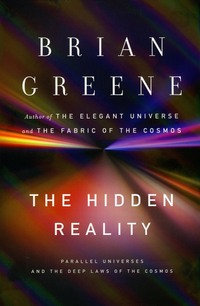
This essay hopes to persuade its readers that science ought to take the notion of deism a lot more seriously. The rise of the artilect in this century makes the notion of a hyperintelligent designer and creator of our universe far more plausible. It suggests the creation of a “hyper-physics” (as distinct from a traditional metaphysics that poses the deepest of questions) that would “investigate” the tree of universes that a branching set of artilects may have created.

Like part of a cosmic Russian doll, our universe may be nested inside a black hole that is itself part of a larger universe.
In turn, all the black holes found so far in our universe—from the microscopic to the supermassive—may be doorways into alternate realities.




 Posts
All Comments
Posts
All Comments