Matryoshka World


Showing posts with label String theory. Show all posts

Tuesday, June 18, 2013

A theory of everything ... has physics gone too far?


Jim Baggott and Mike Duff debate the limits of physics

I agree with Duff.  While observation and confirmation of theory will always be fundamental to the process of real science, the fact that we can not directly observe something in the present does not invalidate a theory that is developed through scientific analysis.

As Duff explains:

 Similarly, string theorists did not assume supersymmetry, extra dimensions, the dualities of M-theory or the myriad possible universes; they discovered them to be consequences of a theory that subsumes empirically well-established features such as general relativity, gauge field theory and chiral quarks and leptons. Current research is devoted to finding out what else M-theory requires.  Moreover, there is a feeling, hard to convey to the layman but shared by many experienced theorists, that these ideas all hang together. As Peter Higgs said recently, "I'm a big fan of supersymmetry because it seems the only way to get gravity into the game''.
Finally, you offer no credible alternative. If you don't like string theory the answer is simple: come up with a better one. The battle for the correct theory will not be won on Amazon or on the blogosphere, however. It will be won in the pages of scholarly scientific journals. Sadly, many critics of string theory, having lost their case in the court of science, try to win it in the court of popular opinion. A science writer calling the theorists who are actually doing the research "confidence tricksters'' or Stephen Hawking "a fairytale physicist'' doesn't cut the mustard.
 

Tuesday, June 4, 2013

New Physics Complications Lend Support to Multiverse Hypothesis


Is Nature Unnatural? by Natalie Wolchover 

 With the discovery of only one particle, the LHC experiments deepened a profound problem in physics that had been brewing for decades. Modern equations seem to capture reality with breathtaking accuracy, correctly predicting the values of many constants of nature and the existence of particles like the Higgs. Yet a few constants — including the mass of the Higgs boson — are exponentially different from what these trusted laws indicate they should be, in ways that would rule out any chance of life, unless the universe is shaped by inexplicable fine-tunings and cancellations.

Tuesday, February 5, 2013

Is the universe fine tuned for making life...or black holes?

io9 has a summary of the argument presented by Lee Smolin in The Life of the Cosmos: What is the purpose of the Universe? Here is one possible answer

Smolin's Theory of Cosmological Natural Selection posits that a process analogous to biological natural selection applies to the creation of universes. From Wikipedia:
The theory surmises that a collapsing black hole causes the emergence of a new universe on the "other side", whose fundamental constant parameters (speed of light, Planck length and so forth) may differ slightly from those of the universe where the black hole collapsed. Each universe therefore gives rise to as many new universes as it has black holes. Thus the theory contains the evolutionary ideas of "reproduction" and "mutation" of universes, but has no direct analogue of natural selection. However, given any universe that can produce black holes that successfully spawn new universes, it is possible that some number of those universes will reach heat death with unsuccessful parameters. So, in a sense, fecundity cosmological natural selection is one where universes could die off before successfully reproducing, just as any biological being can die without having offspring.
 Leonard Susskind, who promotes a similar string theory landscape, stated: "I'm not sure why Smolin's idea didn't attract much attention. I actually think it deserved far more than it got"

Monday, May 21, 2012

Brian Greene: Welcome to the Multiverse

Brian Greene has an article in Newsweek about the possibility of a multiverse.

   Welcome to the Multiverse


Sunday, February 13, 2011

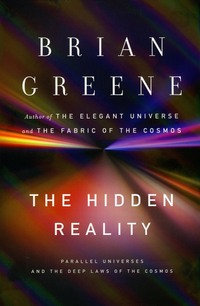
Brian Greene: The Hidden Reality: interview and excerpt from his new book


Brian Greene's new book The Hidden Reality: Parallel Universes and the Deep Laws of the Cosmos, explores how the cutting edge theories of physics including string theory, inflation, and quantum mechanics suggests that our universe may be one of many.

NPR recently had a story on Greene's new book that included an excerpt of the first chapter. Here is the link.

The Wall Street Journal recently interviewed Greene about his new book. Link to WSJ article.

Thursday, September 16, 2010

Is there a deep relationship between string theory and quantum theory?

ScienceDaily (Sep. 2, 2010) — Researchers describe how to carry out the first experimental test of string theory in a paper published September 2 in Physical Review Letters.


Professor Duff recalled sitting in a conference in Tasmania where a colleague was presenting the mathematical formulae that describe quantum entanglement: "I suddenly recognised his formulae as similar to some I had developed a few years earlier while using string theory to describe black holes. When I returned to the UK I checked my notebooks and confirmed that the maths from these very different areas was indeed identical."


This relationship between the math of string theory and the math of quantum entanglement may allow for direct testing of string theory in the lab, at least to the extent that the relationship pertaining to quantum entanglement is testable.

Here is the link to the Science Daily story

Thursday, July 15, 2010

Gravity Doesn't Exist?

This paper argues that gravity "doesn't exist." More specifically the author Erik Verlinde, described by the New York Times as a respected string theorist and professor of physics at the University of Amsterdam, says gravity is emergent from the laws of thermodynamics.

If you have difficulty understanding the paper, do not be alarmed, according to this article in the Times: "some of the best physicists in the world say they don’t understand Dr. Verlinde’s paper, and many are outright skeptical."

Sunday, June 27, 2010

The Myth of the Beginning of Time

This is a good article from 2004 in Scientific American

Monday, June 21, 2010

Scientific American Magazine: "Twistor" Theory Reignites the Latest Superstring Revolution

A few months later Witten posted a dense 97-page paper that tied together twistors and strings—bringing twistors back to life and impressing even the harshest critics of string theory. In the past few years theorists have built on Witten’s work and rethought what space and time are. They have already spun off calculational techniques that make child’s play of the toughest problems in ordinary particle physics. “I have never been more excited about physics in my life,” says string theorist Nima Arkani-Hamed, who recently moved to the institute from Harvard University to immerse himself in the emerging field. “It is developing at a blistering pace right now, with a group of roughly 15 people in the world working on it day and night.”


twistor theory