Matryoshka World


Showing posts with label cosmology. Show all posts

Friday, September 13, 2013

Data Opens Possibility Of A Curved Cosmos


 This article at livescience.com discusses recent data from the Planck satellite launched by the European Space Agency in 2009 that supports the existence of the same anomaly NASA's Wilkinson Microwave Anisotropy Probe (WMAP), launched in 2001, found.  The Wilkinson data unexpectedly suggested that the universe may be lopsided — hot and cold spots on one side of the cosmos appear hotter and colder than on the other. One explanation for the data is that the universe is curved, or saddle shaped.  From the article:
Researchers investigating a major anomaly in the afterglow of the Big Bang suggest the fabric of space and time may actually be curved like a saddle, possibly upending the currently leading notion that light and anything else traveling through spacetime zips through a "flat" universe in straight lines. In a saddle-shaped universe, however, any object that seems like it is traveling parallel to another item will actually veer away from it after vast distances.
Andrew Liddle, a cosmologist at the University of Edinburgh in Scotland Liddle and his colleague Marina Cortês detail their findings in the Sept. 13 issue of the journal Physical Review Letters.


Friday, July 26, 2013

Swirls in the Afterglow of the Big Bang Could Set Stage for Major Discovery


From Science Now:

Scientists have spotted swirling patterns in the radiation lingering from the big bang, the so-called cosmic microwave background (CMB). The observation itself isn't Earth-shaking, as researchers know that these particular swirls or "B-modes" originated in conventional astrophysics, but the result suggests that scientists are closing in on a much bigger prize: B-modes spawned by gravity waves that rippled through the infant universe. That observation would give them a direct peek into the cosmos' first fraction of a second and possibly shed light on how it all began.

Tuesday, February 19, 2013

Subatomic calculations indicate finite lifespan for universe


The universe is going to end says Joseph Lykken, a theoretical physicist with the Fermi National Accelerator Laboratory in Batavia, Illinois. Lykeen spoke before presenting his research at the American Association for the Advancement of Science meeting in Boston on Monday, February 18, 2013.

"A little bubble of what you might think of as an ‘alternative' universe will appear somewhere and then it will expand out and destroy us," Lykken said, adding that the event will unfold at the speed of light.

This conclusion is based on the most up to date calculations of the mass of the Higgs boson-126 billion electron volts - a critical number in figuring out the fate of the universe.

The good news: this will not happen for many billions of years. 

See also:  The top quark and Higgs boson masses and the stability of the electroweakvacuum

Monday, July 23, 2012

How big is the universe?


This excellent blog post by Ethen Siegal explains how the latest findings from the WMAP satellite indicate the radius of the universe is at least 150 times larger than the observable universe.  So, at a minimum the universe is vastly larger than what we can actually observe.

Thursday, April 19, 2012

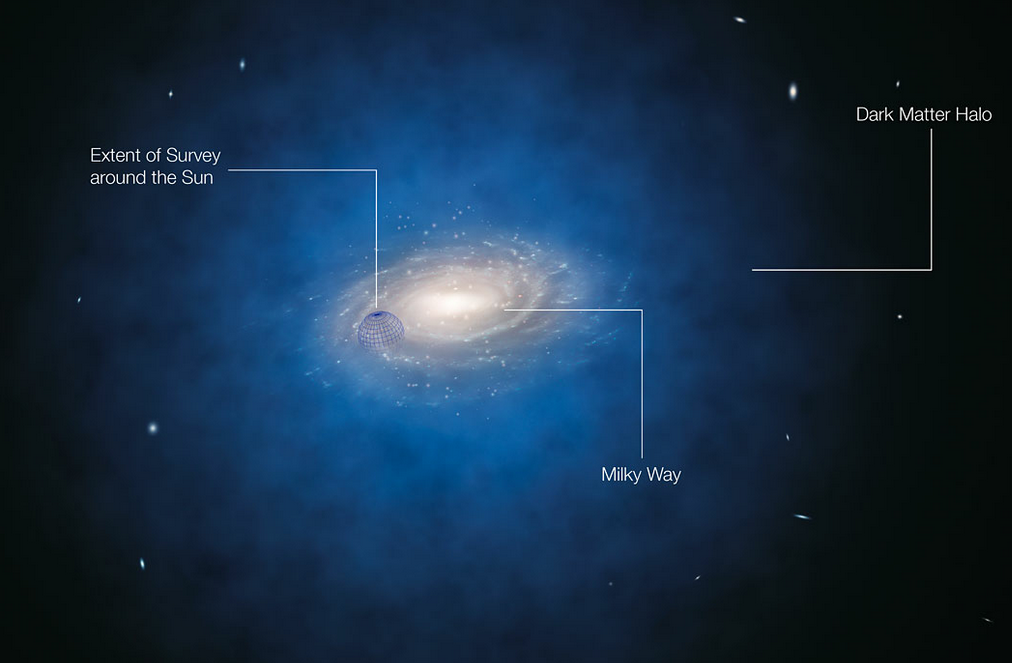
Lack of evidence of dark matter in solar neighborhood may indicate dark matter theories are wrong


A new study of the motions of stars in the Milky Way has found no evidence for dark matter in a large volume around the Sun.

This is kurzweilai.net's article on the findings:

Serious Blow to Dark Matter Theories?

Saturday, February 26, 2011

Dark Matter: New Evidence on How Galaxies Are Born


Time magazine article on a new paper published in Nature that explains starburst galaxies as resulting from the size of the dark matter that surrounds them.

Dark Matter: New Evidence on How Galaxies Are Born

Friday, February 25, 2011

Modified theory of gravity or dark matter?


There was a time when the idea of dark matter pervading the universe was considered by most cosmologists as a radical theory not to be taken very seriously. However, over time ever more evidence from observations of galaxies, and galaxy clusters and the afterglow of the big bang pointed to the existence of dark matter.

Despite the adoption of dark matter as the best current explanation for observations, some researchers prefer an idea known as Modified Newtonian Dynamics (MOND) which is basically a theory that gravity works a little differently than currently understood on larger scales.

In this paper, Stacy McGaugh, an astronomer at the University of Maryland, College Park, reports that MOND can explain an observed correlation between the mass and the rotation speed of galaxies. McGaugh gathered data from various sources on 47 galaxies that contain more hydrogen gas than stars. The mass of the gas can then be estimated directly. McGaugh made a plot of visible mass versus rotation speed for the galaxies. He then plotted the prediction that comes straight out of MOND in a few lines of algebra. The MOND line went right through the data. "You draw the line and the data fall right on it," McGaugh says. "No muss, no fuss." He reports the result in a paper in press at Physical Review Letters.

Does this mean gravity may work differently on large scales, and that observations of large scale structures in the universe may be explained without invoking dark matter? Most astronomers would still say the evidence for dark matter is too strong for the theory to be discarded, but some believe the jury is still out on the dark matter verdict.

More Evidence Against Dark Matter?

Thursday, February 24, 2011

What are the laws of physics anyway?

Physics might be defined as the subject that tries to figure out why the world may look incomprehensibly complex at first, but on closer examination is governed by simple laws. Those laws, applied repeatedly, build up the complexity. From this definition, you'd presume that physicists have at least sorted out what they mean by "law".


What are the laws of physics anyway?

Sunday, February 13, 2011

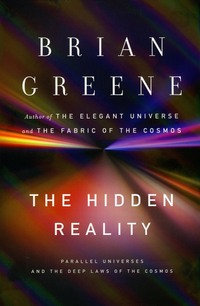
Brian Greene: The Hidden Reality: interview and excerpt from his new book


Brian Greene's new book The Hidden Reality: Parallel Universes and the Deep Laws of the Cosmos, explores how the cutting edge theories of physics including string theory, inflation, and quantum mechanics suggests that our universe may be one of many.

NPR recently had a story on Greene's new book that included an excerpt of the first chapter. Here is the link.

The Wall Street Journal recently interviewed Greene about his new book. Link to WSJ article.

Saturday, September 4, 2010

Born in an infinite universe: a cosmological interpretation of quantum mechanics

This paper argues the Born rule is actually rendered redundant in an infinite universe in which all outcomes are realized.

this paper takes the conclusions of Page from the paper linked in the August 27 post immediately below a step further.
Page argued that Born's Rule would be insufficient in an extremely large universe due to the lack of definite projection operators.
We study the quantum measurement problem in the context of an infinite, statistically uniform space, as could be generated by eternal inlfation. It has recently been argued that when identical copies of a quantum measurement system exist, the standard projection operators and Born rule method for calculating probabilities must be supplemented by estimates of relative frequencies of observers. We argue that an infinite space actually renders the Born rule redundant, by physically realizing all outcomes of a quantummeasurement in different regions, with relative frequencies given by the square of the wave function amplitudes. Our formal argument hinges on properties of what we term the quantum confusion operator, which projects onto the Hilbert subspace where the Born rule fails, and we comment on its relation to the oft-discussed quantum frequency operator. This analysis unifies the classical and quantum levels of parallel universes that have been discussed in the literature, and has implications for several issues in quantum measurement theory. Replacing the standard hypothetical ensemble of measurements repeated ad inifnitum by a concrete decohered spatial collection of experiments carried out in different distant regions of space provides a natural context for a statistical interpretation of quantum mechanics. It also shows how, even for a single measurement, probabilities may be interpreted as relative frequencies in unitary (Everettian) quantum mechanics.

We also argue that after discarding a zero-norm part of the wavefunction, the remainder consists of a superposition of indistinguishable terms, so that arguably “collapse” of the wavefunction is irrelevant, and the “many worlds” of Everett’s interpretation are uniifed into one. Finally, the analysis suggests a “cosmological interpretation” of quantum theory in which the wave function describes the actual spatial collection of identical quantum systems, and quantum uncertainty is attributable to the observer’s inability to self-locate in this collection.

Sunday, June 27, 2010

The Myth of the Beginning of Time

This is a good article from 2004 in Scientific American

Tuesday, April 27, 2010

New Evidence That Mirror Matter May Fill the Universe?

"However, mirror particles interact with each other in exactly the same way as ordinary particles. So in this scenario, the Universe is filled with mirror planets, stars and galaxies. That's a mind blowing idea."


LINK

Does Every Black Hole Contain Another Universe?


Like part of a cosmic Russian doll, our universe may be nested inside a black hole that is itself part of a larger universe.

In turn, all the black holes found so far in our universe—from the microscopic to the supermassive—may be doorways into alternate realities.


The idea that black holes may be worm holes to other universes isn't new. However, in a recent paper published in the journal Physics Letters B, Indiana University physicist Nikodem Poplawski presents new mathematical models that describe how wormholes are viable alternatives to the "space-time singularities" that Albert Einstein predicted to be at the centers of black holes.

National Geographic article on Poplawski's paper

Saturday, March 13, 2010

Mysterious Cosmic 'Dark Flow' Tracked Deeper into Universe


The dark flow is controversial because the distribution of matter in the observed universe cannot account for it. Its existence suggests that some structure beyond the visible universe -- outside our "horizon" -- is pulling on matter in our vicinity.


Mysterious Dark Flow

Tuesday, March 2, 2010

Saturday, February 27, 2010

Our Universe as a Hologram?


New Scientists Article

For many months, the GEO600 team-members had been scratching their heads over inexplicable noise that is plaguing their giant detector. Then, out of the blue, a researcher approached them with an explanation. In fact, he had even predicted the noise before he knew they were detecting it. According to Craig Hogan, a physicist at the Fermilab particle physics lab in Batavia, Illinois, GEO600 has stumbled upon the fundamental limit of space-time - the point where space-time stops behaving like the smooth continuum Einstein described and instead dissolves into "grains", just as a newspaper photograph dissolves into dots as you zoom in. "It looks like GEO600 is being buffeted by the microscopic quantum convulsions of space-time," says Hogan.

If this doesn't blow your socks off, then Hogan, who has just been appointed director of Fermilab's Center for Particle Astrophysics, has an even bigger shock in store: "If the GEO600 result is what I suspect it is, then we are all living in a giant cosmic hologram."